// AI FOR
Enterprise AI Consultancy & Agentic AI Engineering — London
We help enterprises pick the few
AI bets that matter — and get them
into production, not stuck in pilots.
Applied AI Engineering · London · Est. 2022 · Founded by the former European CTO of IBM Watson
OUR
WORK
[ CLICK LOGO FOR CASE_STUDY ]





// TESTIMONIAL

PARTNERSHIP
3+ years
Dr Oliver Bogler
Director, NCI's Center for Cancer Training
“I have worked with Barnacle Labs for more than 3 years on a project at the National Cancer Institute (NCI)... they treated the work like a collaboration... if you are looking for a partner in AI, I couldn't recommend them more.”
DR OLIVER BOGLER

National Cancer Institute
// THE_AI_BREAKTHROUGH_SPRINT
What could AI make
possible for your business?
Find out with world-class AI engineers — the people who build these systems, not consultants or trainers.
In a hands-on, one-day workshop, your team gets to grips with what AI really can and can't do — and uncovers the opportunities specific to your business, so you can choose the strongest yourself. Then, if you're ready, we spend two weeks building a working proof of concept to test the idea and show what it would take to put it into production.
One day to find the opportunity. Two weeks to build the proof.
[ EXPLORE THE AI BREAKTHROUGH SPRINT → ]WHO
WE ARE
DUNCAN ANDERSON

FORMER EUROPEAN CTO IBM WATSON
JD WUARIN

AI ENGINEERING COLUMBIA · ST. GALLEN
// BACKGROUND
Our founders have been building with modern AI for over a decade — from leading AI at IBM Watson to securing early GPT-3 access in 2020.
// THE MISSION
We build production AI systems for high-stakes environments—including the US Federal Government, financial services, global enterprises, and biotech firms. We specialise in the hard parts that quietly derail AI projects, bringing creative problem-solving rooted in experience, not guesswork.
// ENTERPRISE_AI
HOW
WE HELP ENTERPRISES PUT AI TO WORK
We build custom AI agents for organisations where the problem is real, the stakes are high, and off-the-shelf doesn't cut it. [ ALL_SERVICES → ]
// OUR_SPECIALISMS
01What agents do
Every person gets their own AI agent — and the agents collaborate with each other
[ LEARN_MORE → ]
02What agents know
Help your agents learn from experience and get smarter over time
[ LEARN_MORE → ]
03Where agents run
Sovereign infrastructure you control
[ LEARN_MORE → ]
Not sure where to start?
Talk to an engineer about your workflows, constraints, and opportunities — and we'll show you where we'd focus first.
OUR
AI
Don't just take our word for it.
Alongside the systems we build for clients, we build our own — production AI you can use right now. It's how you can judge the quality of our work for yourself.
 LIVE
LIVEBarnacle Intel
AI intelligence desk
Our agents read the day's AI news and publish a daily briefing, a live tracker across every org, person and model we cover, and verdicts on the big questions.
[ TRY_IT_LIVE → ]
 BETA
BETAParlium
AI thinking partner for research
Explore a scientific hunch, then test it against the literature — PubMed, bioRxiv, Semantic Scholar and 40+ funding databases. Think differently, test rigorously.
[ TRY_IT_LIVE ↗ ]
Sargassum
Risk & control intelligence
Turns a tangle of risk and control documentation — obligations, policies, procedures, controls — into a single, source-grounded knowledge graph you can actually query.
Coming soon
// WHY_BARNACLE
01_CODE_NOT_SLIDES
Working code. Not slide decks.
Working software in weeks, not a six-month discovery deck. If an AI bet won't pay off, you'll know by Day 15 — out of pilot purgatory, into production.
02_THE_TRENCHES
Built for the trenches.
High-stakes, regulated environments are our specialism — agentic systems with memory, orchestration and strict guardrails. With our Sovereign Agent Stack, your data never touches a public API.
03_ZERO_LOCK_IN
Zero vendor lock-in.
We build for handover — production systems your team can own, run and evolve. No black boxes, no ongoing dependency on us. We hand it over and get out of the way.
OUR
THOUGHTS
Thought leadership & research
GUIDE
AI Agents for Enterprise
A strategic guide for enterprise leaders on building AI agents at scale. Covers architecture patterns, deployment strategies, and the governance frameworks that separate successful agent programmes from expensive experiments.
[ READ → ]
GUIDE
Agent Memory Systems
Giving agents real memory — beyond context windows and vector databases. How to build systems that remember what matters, forget what doesn't, and get smarter with every interaction.
[ READ → ]
GUIDE
The OpenClaw Ecosystem
Inside the fastest-growing open-source agent framework and what it means for enterprise. A deep dive into the ecosystem and why enterprises are starting to take notice.
[ READ → ]
GUIDE
Sovereign AI & Data Privacy
AI privacy, compliance, and data sovereignty for regulated environments. How to deploy frontier AI capabilities on infrastructure you control — without sacrificing performance or falling foul of GDPR and the AI Act.
[ READ → ]
// FROM_THE_BLOG
The Missing Piece of the Claude Code Workflow: Isolated Worktree Databases
JD Wuarin
OpenClaw and the Programmable Soul
Duncan Anderson
Building AI products means managing API costs. Here's what actually worked
Thibault Boutet
Building a Production Multi-Agent System for Document Writing
Thibault Boutet
Mean Pooling Beats Attention: Predicting Telomerase Activity from Whole-Slide Images
Kevish Napal
The Dimension Dilemma: Why 2.5D Models Outperform 3D CNNs for Stroke Classification
William Auroux
Understanding and Processing CT Imaging for Stroke Detection
William Auroux
Building a Reproducible Multimodal Pipeline
Kevish Napal
Understanding Cancer and Telomerase: From Biology to New Treatments
Kevish Napal
The 4 Levels of AI Agents: When to Use Workflows vs Autonomous Systems
Duncan Anderson
AI FROM THE
TRENCHES
Conversations with leaders who've actually led AI initiatives
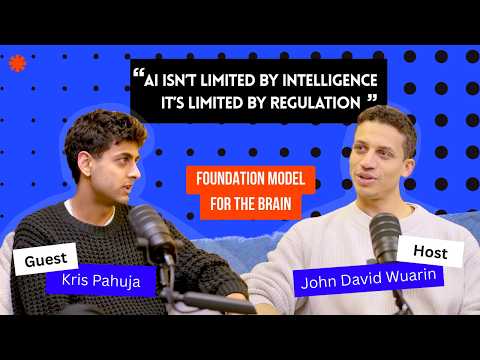
Can a Foundation Model Read the Human Brain?
with Kris Pahuja from Piramidal
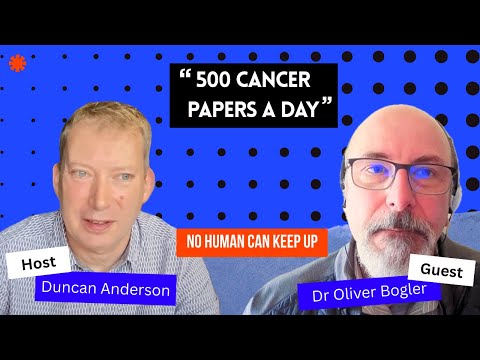
Can AI Save Scientists From Information Overload?
with Dr Oliver Bogler
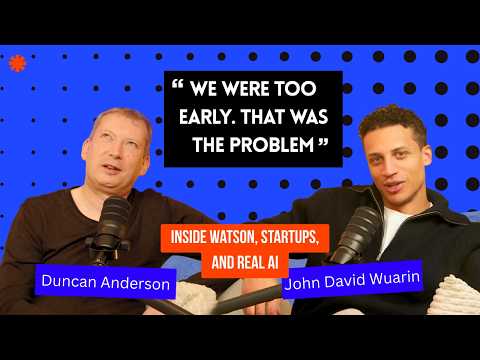
From IBM Watson to Barnacle Labs: Lessons From Building AI Too Early
with Duncan Anderson and JD Wuarin
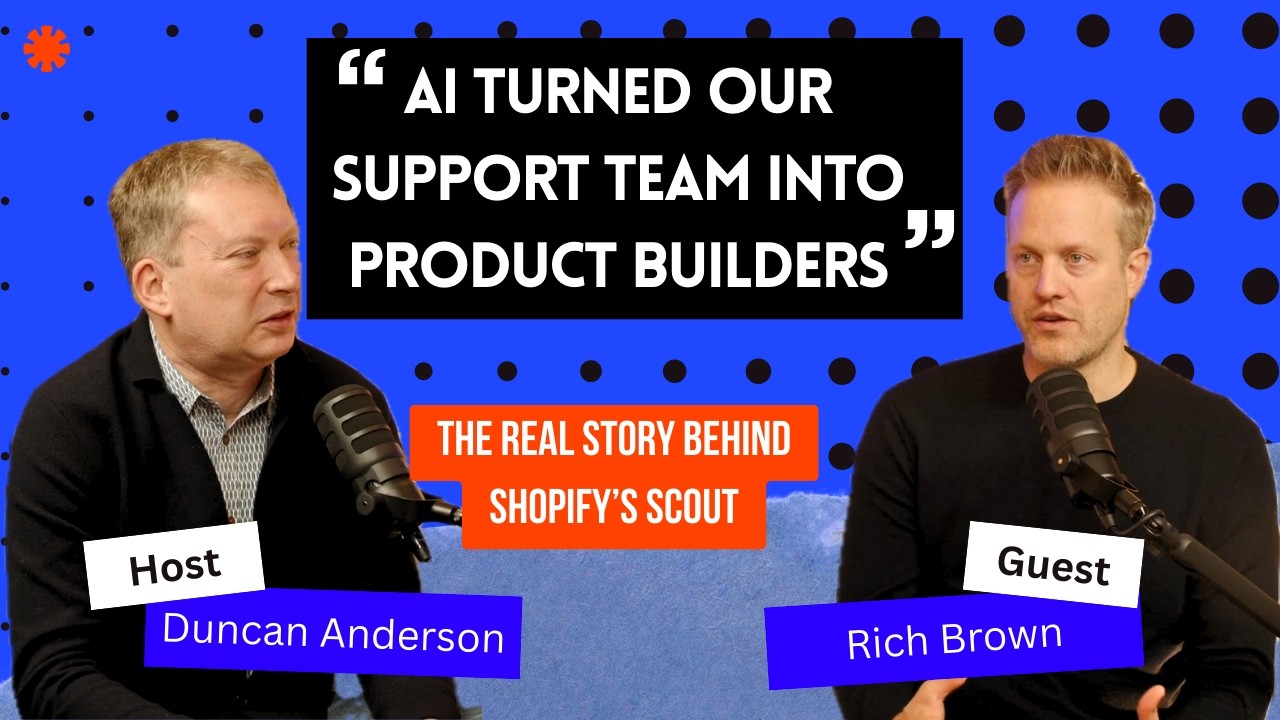
Inside Shopify’s Scout: The scrappy AI tool that went all the way to the boardroom
with Rich Brown from Shopify
// READY_WHEN_YOU_ARE
Find your AI breakthrough.
Start with a one-day workshop to find the opportunity — then decide your next move with evidence, not opinion.